48V and 51.2V lithium battery platforms for B2B projects.
Reference configurations across mobility, energy storage and backup applications, with chemistry, current, enclosure and communication reviewed per system.
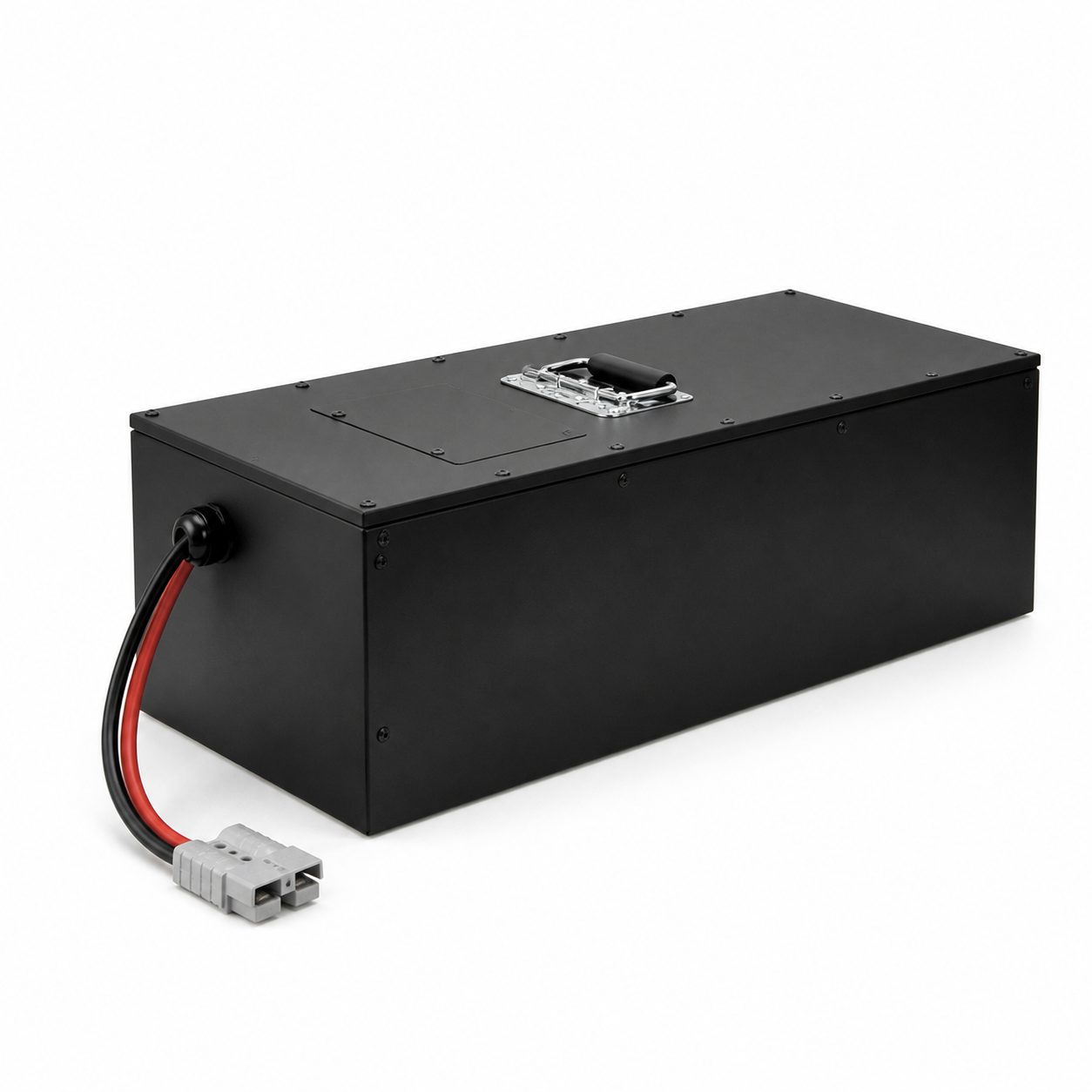
48V and 51.2V are related market terms—not interchangeable specifications.
A 16-series LiFePO4 pack is commonly 51.2V nominal, while other lithium-ion architectures or market labels may use 48V. The charger, controller, inverter or DC bus must be checked against the full charge and discharge window.
The same voltage family can serve an e-bike, industrial vehicle, UPS or storage system, but each has different current, thermal, communication, enclosure and safety requirements. Pages and quotations therefore stay application-specific.
Start from a real configuration, then confirm the project version.
Reference models demonstrate available form factors and engineering experience. Current drawings, component revisions, documentation, MOQ and delivery terms are reconfirmed before quotation.
Select by architecture and duty, not the label alone.
Voltage compatibility
Match nominal, full-charge and cutoff voltage to the host and charger.
Load profile
Size cells, BMS, conductors and thermal path around continuous and transient current.
Interface
Define mechanical fit, connectors, protection, communication and system control responsibilities.
Approval
Validate the model and freeze drawings, software/configuration, documents and production controls.
What we confirm before supply.
| Voltage family | 48V or 51.2V nominal; chemistry and series count determine the operating window. |
|---|---|
| Applications | Mobility, ESS, UPS, industrial equipment and other qualified systems require separate validation. |
| BMS | Current, contactor/MOS architecture, temperature sensing, SOC/SOH, communication and diagnostics. |
| Mechanical | Form factor, mounting, cable/terminal, service disconnect, ingress and thermal design. |
| Supply | Sample and production quantities, OEM branding, documentation, packing and destination. |
Questions purchasing teams ask.
Is a 51.2V LiFePO4 battery a 48V battery?
It is often grouped in the 48V market, but the exact full-charge and cutoff voltage must match the equipment. Do not treat the names as proof of compatibility.
Can the same 48V pack serve an e-bike and an ESS?
Normally no. Their current profile, enclosure, charger/controller, communication, mounting and validation needs differ.
Do you offer 48V 100Ah with BMS?
Reference configurations exist in this voltage and capacity class, but BMS current, communication, form factor and documents are confirmed for the application and model.
Sourcing a 48V or 51.2V battery?
Send the host voltage window, load, capacity, charger, space, interface and quantity.