18650 lithium-ion battery pack design for manufacturable OEM systems.
A procurement and engineering framework for cell selection, S/P architecture, interconnects, fusing, thermal control, BMS, enclosure and validation.
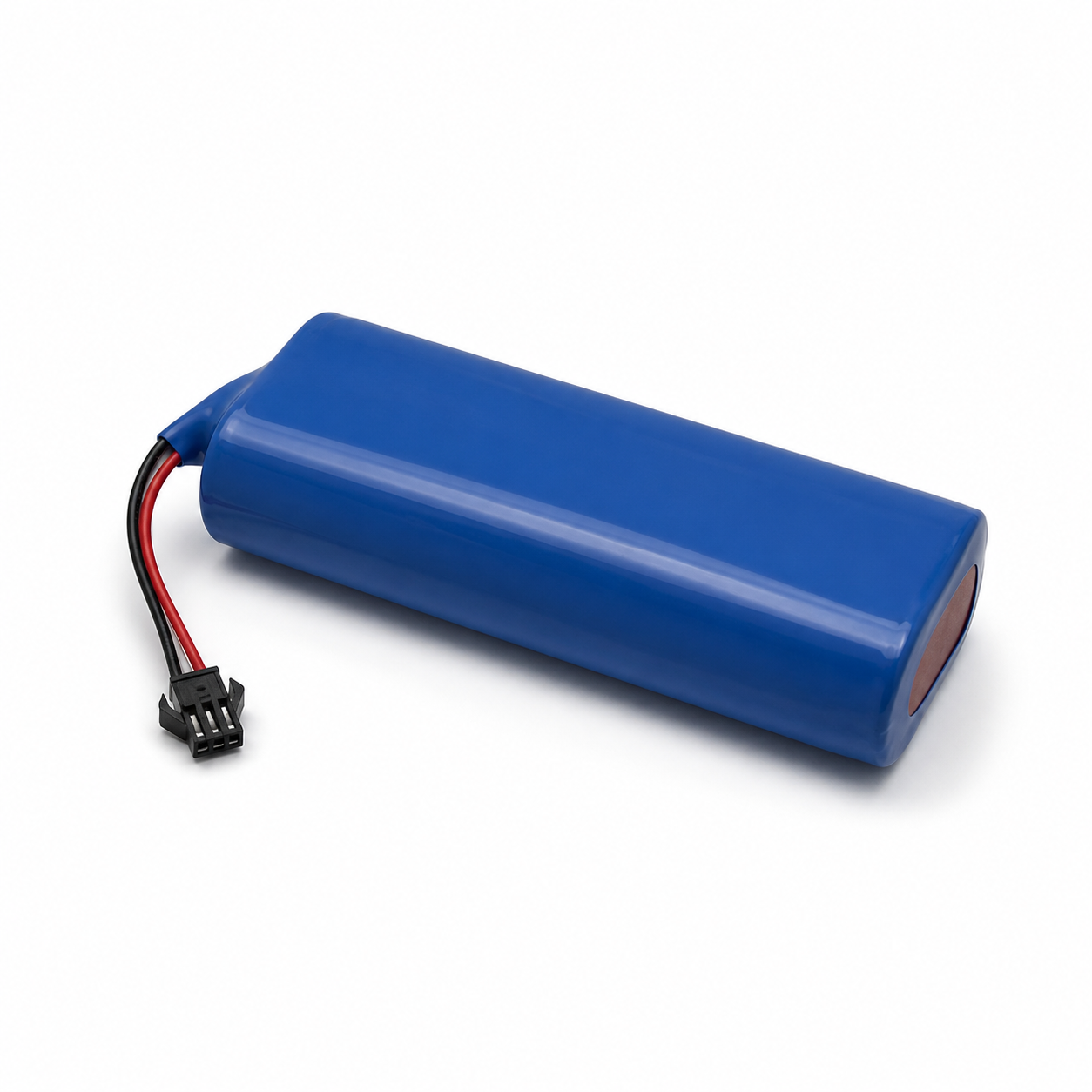
A sound 18650 design controls cell consistency, current sharing and heat from prototype through production.
Begin with the equipment voltage, energy, continuous and transient current, charging, environment and space. Select a traceable 18650 cell whose verified data supports that duty, then define series/parallel groups, group-level protection, interconnect and weld design, sensing, BMS, insulation, spacing, mechanical support and thermal path.
Manufacturability matters: welding access, polarity control, inspection, traceability, end-of-line tests and approved component changes must be designed before volume production.
Select cells from verified data and a controlled supply route.
Model name alone is not enough; revision, lot traceability and supplier change control matter.
| Cell evidence | Manufacturer data, current/temperature behavior, lifecycle conditions, transport evidence and supply status. |
|---|---|
| Matching | Defined incoming checks and grouping criteria appropriate to the architecture. |
| Parallel groups | Current sharing, conductor symmetry, individual/group protection and fault propagation must be considered. |
| Availability | Avoid a prototype-only cell choice that cannot support the expected production lifecycle. |
Treat welds, busbars, holders and fusing as electrical and thermal components.
Resistance at joints and interconnects contributes voltage drop and localized heat.
Current path
Size conductor material, cross-section and topology for normal and fault currents.
Weld/process
Define weld stack, access, settings, inspection and destructive process-validation samples.
Insulation
Control polarity, creepage/clearance, abrasion, fishpaper/barriers and cable routing.
Fusing
Coordinate cell/group/pack protection with credible faults and the BMS switching architecture.
Place sensing and protection around the real pack architecture.
The BMS cannot compensate for an undersized interconnect, poor cell support or an unvalidated thermal path.
| Sensing | Group voltage, pack current and temperatures at representative risk locations. |
|---|---|
| Protection | Voltage, current and temperature responses coordinated with charger and equipment. |
| Thermal design | Cell spacing, heat transfer, enclosure, cooling/heating and abnormal-condition response. |
| Communication | SOC/SOH, alarms, CAN/RS485/UART and diagnostic requirements where the host needs them. |
Verify the pack and the production process.
Validation should use the intended configuration and representative equipment conditions.
Electrical
Capacity/energy, voltage drop, peak load, charge behavior, protection and standby consumption.
Thermal
Temperature distribution at cells, welds, busbars, switches and connectors.
Mechanical
Fit, retention, vibration/shock, enclosure, cable/connector strain and service access.
Production
Traceability, polarity checks, weld inspection, insulation tests, programming and end-of-line acceptance.
Practical procurement questions.
How many 18650 cells are needed for a battery pack?
The series count follows the required voltage window; parallel count follows usable energy and current after cell limits, temperature, reserve and lifecycle are considered. A cell-count formula alone is not a design.
Is an 18650 pack always cheaper than a prismatic pack?
No. Cell cost, interconnect count, manufacturing automation, enclosure, BMS, thermal design, testing, volume and supply continuity all affect total cost.
Can you show how to weld and wire an 18650 pack?
This page deliberately does not provide step-by-step assembly instructions. It focuses on OEM specification, design controls and validation.
Official references used for this guide.
Always confirm the current rule, exact model and destination before relying on a document.
- NREL: Li-Ion Battery Thermal Characterization for Thermal Management Design — thermal behavior must be evaluated at cell, interconnect and pack level; the research is not a product test report.
- Texas Instruments: BMS monitoring, protection and balancing — describes common BMS functions; project thresholds and architecture still require validation.
- PHMSA Lithium Battery Guide 2024 — official U.S. guidance on classification, UN 38.3 test summaries and shipper responsibilities.
Developing an 18650 pack for production?
Send the duty profile, voltage, energy, current, space, interface, validation and volume requirements.