Lithium Battery Connector
Specify a connector and harness from continuous and peak current, temperature rise, voltage drop, contact system, keying, locking, ingress, vibration, service access and an approved pinout.
By Batteries To Spec Technical Editorial Team · Updated September 3, 2026
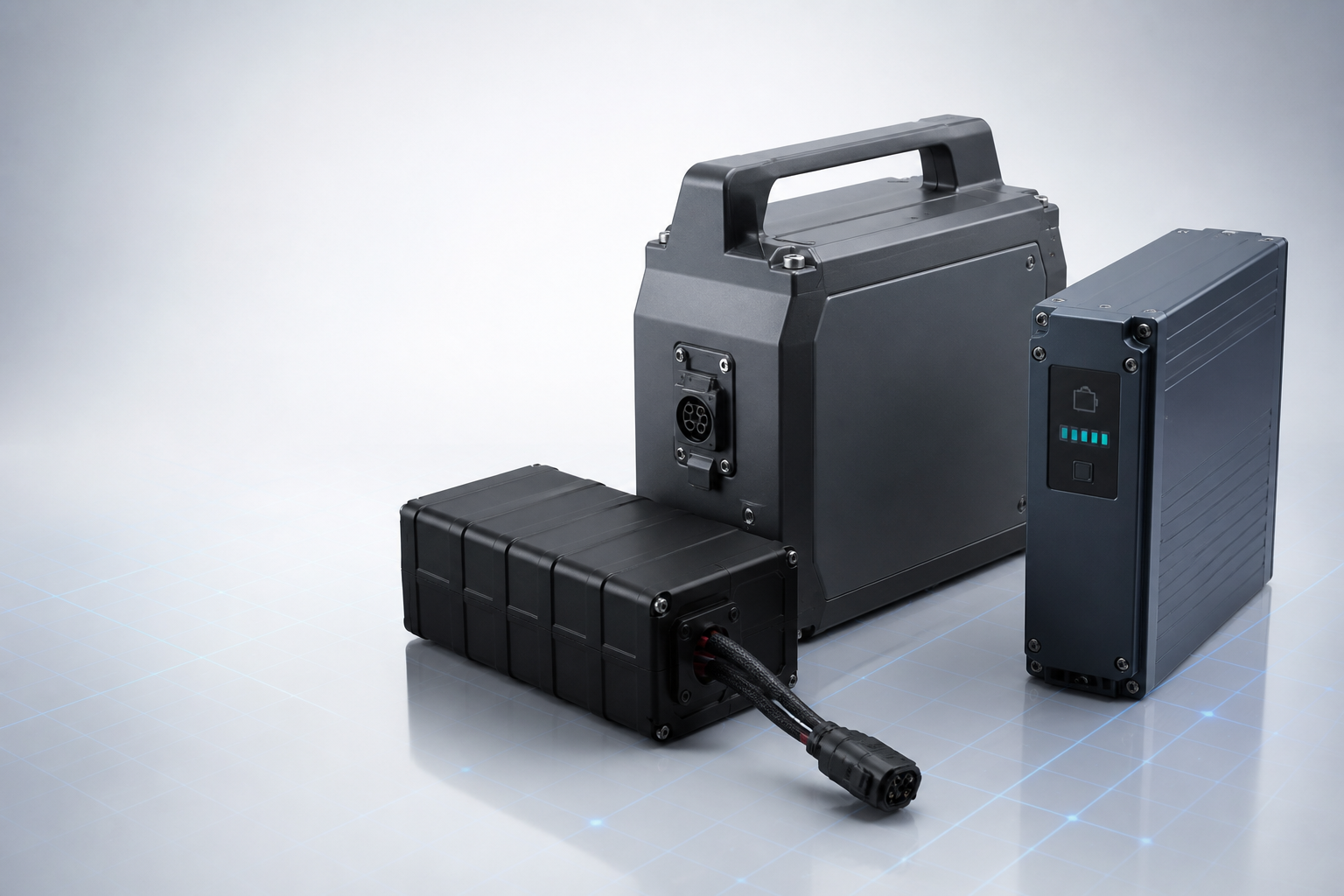
Resolve the decision before selecting a model.
Specify a connector and harness from continuous and peak current, temperature rise, voltage drop, contact system, keying, locking, ingress, vibration, service access and an approved pinout.
| IP evidence | Applies to an exact tested enclosure |
|---|---|
| Connector | Current rating alone is insufficient |
| Topology | Series/parallel use must be model-approved |
| Change control | Cable, seal and connector changes may require retest |
Practical review checklist
Freeze drawings, terminals, pinout and mating parts.
Use continuous/peak current, voltage drop and temperature rise.
Set vibration, shock, ingress, venting and materials.
Test the assembled configuration and installation boundary.
What to request from a supplier
Ask for a model-specific specification, electrical and mechanical limits, BMS or interface definition, current test evidence, document list, sample plan and change-control route. Keep open items visible rather than replacing them with a generic promise.
What this page does not prove
It does not certify an unnamed battery, approve a host system, guarantee a carrier route or establish a quotation without the exact model, destination and date.
Turn the decision into a reviewable battery specification.
Send the application, voltage window, load, runtime, space, interfaces, environment, quantity, destination and required documents.