What drives BMS cost in an industrial lithium battery pack?
A cost framework for complete industrial battery projects—not a retail price list for standalone BMS boards.
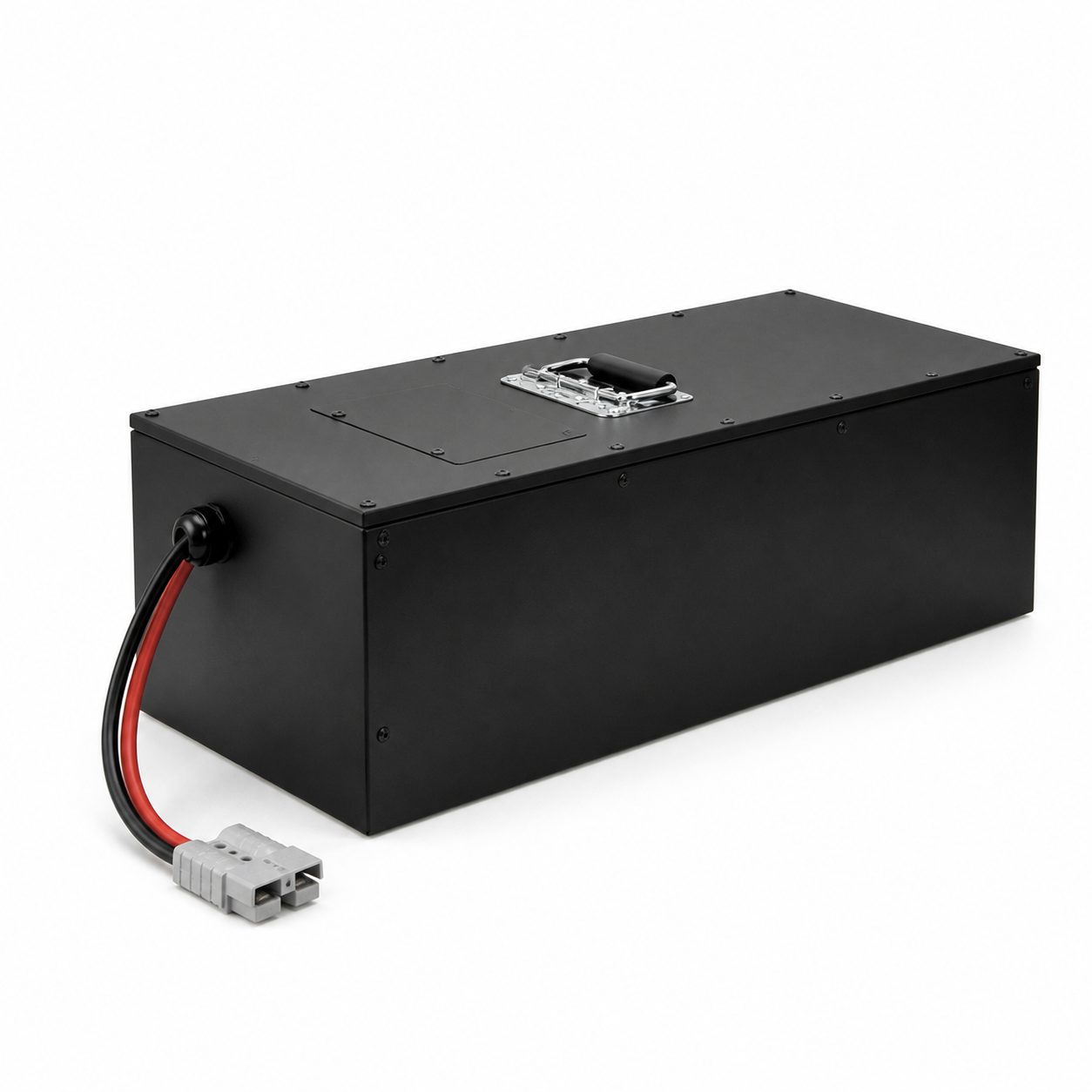
BMS cost follows system complexity, current architecture, software and verification—not voltage alone.
The budget changes with chemistry and series count, measurement channels and accuracy, continuous and peak current, MOSFET or contactor architecture, precharge, isolation monitoring, temperature channels, communications, SOC/SOH algorithms, diagnostics, firmware/configuration, functional-safety expectations, qualification and production quantity.
Separate non-recurring engineering and validation from per-unit production cost. A low-cost retail protection board is not a valid price reference for an integrated industrial pack with host communication, contactors, logs and controlled software.
Voltage, current and execution architecture set the foundation.
Higher series count and current can change isolation, switching, sensing, connectors and protection requirements.
| Measurement | Cell/group channels, pack voltage, current sensor, temperature inputs, accuracy and diagnostic coverage. |
|---|---|
| Power switching | Integrated MOSFETs or external contactors, precharge, coil drivers, fuses and service disconnect. |
| Isolation | Galvanic isolation, insulation monitoring and isolated communication where the system requires them. |
| Environment | Temperature, vibration, moisture, enclosure/PCB protection and connector selection. |
Host integration can exceed the cost of the PCB itself.
Protocol scope, diagnostics, configuration and lifecycle support should be quoted explicitly.
Communication
CAN, RS485, UART or SMBus physical layer and message definition.
Algorithms
SOC/SOH, balancing control, limits and state-machine behavior for the chemistry and duty.
Diagnostics
Fault codes, event logs, service tools, data access and calibration.
Lifecycle
Firmware release, configuration control, cybersecurity expectations and field-update responsibility.
Separate NRE, samples, validation and recurring production.
This makes supplier quotations comparable.
| NRE | Requirements, hardware adaptation, firmware/protocol work, tooling and documentation. |
|---|---|
| Samples | Prototype boards/packs, engineering builds and host integration support. |
| Validation | Electrical, thermal, fault, environmental, EMC/system and certification-related tests as applicable. |
| Production | Per-unit hardware, programming, calibration, end-of-line test and traceability. |
| Volume/date | Currency, quantity band and quotation date matter; component availability can change assumptions. |
Practical procurement questions.
What is the price of a BMS for a lithium-ion battery?
There is no responsible industrial-pack price without the series count, current, architecture, sensing, communication, software, validation and volume. This page does not sell standalone retail boards.
Is a smart BMS always more expensive?
Communication hardware is only one part. Protocol development, algorithms, diagnostics, configuration, validation and lifecycle support may be the larger cost drivers.
Can I compare quotes by current rating?
Not alone. Confirm chemistry/series count, continuous and peak current conditions, switching architecture, sensing, communication, software, validation and included NRE.
Official references used for this guide.
Always confirm the current rule, exact model and destination before relying on a document.
- Texas Instruments: battery monitor, protector or gauge — explains functional boundaries among monitoring, protection and gauging.
- Texas Instruments: BMS monitoring, protection and balancing — describes common BMS functions; project thresholds and architecture still require validation.
Need a pack-level BMS budget?
Send the voltage, current, architecture, communication, validation and production volume.