Lithium-ion battery options for modular UPS systems.
A battery-side integration guide for matching the UPS DC bus, real load, runtime, high-rate discharge, recharge, BMS interface, cabinet and fault strategy.
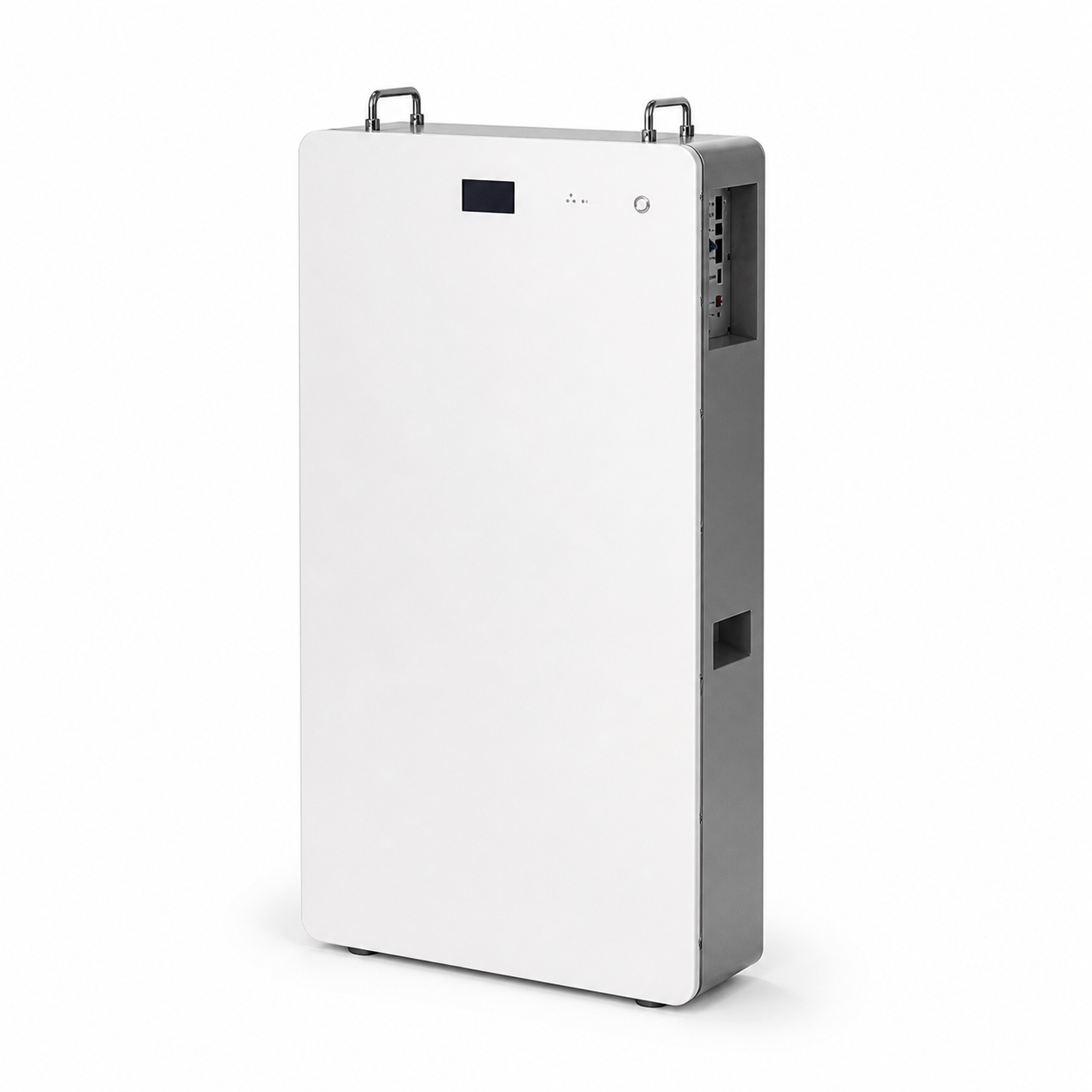
First separate modular UPS power blocks from modular battery strings.
A modular UPS can scale power through replaceable power modules while its battery architecture remains centralized, string-based or separately modular. Do not assume one form of modularity proves the other.
Battery selection requires the exact UPS model and DC bus window, real protected load, power factor and conversion efficiency, runtime at the required discharge rate, recharge target, cabinet/rack arrangement, parallel-string rules, BMS communication and alarm behavior, fault isolation and system-level approval.
Map UPS power modules and battery modules separately.
The UPS may have N+1 power capability without independently isolatable battery modules.
| UPS side | Power modules, static bypass, rectifier/charger capacity, DC bus and system controller. |
|---|---|
| Battery side | Battery blocks/modules, strings, cabinets, BMS hierarchy, protection and service disconnects. |
| Scalability | Approved power and battery expansion ranges, matching and commissioning rules. |
| Responsibility | UPS OEM/integrator approval, battery supplier scope, facility protection and commissioning. |
Use rate-dependent usable energy, not nameplate Ah alone.
High-rate UPS discharge, voltage sag, cutoff and temperature can reduce usable runtime.
Real load
Use kW/VA, power factor, efficiency and load profile.
Discharge rate
Check the exact battery at required current, duration, voltage cutoff and temperature.
Reserve & aging
Define beginning/end-of-life runtime and operational reserve.
Recharge
Verify rectifier/charger capacity, current limits and required recovery time.
Define alarms, shutdown and fault isolation at system level.
BMS communication must match the UPS monitoring and protection concept.
| Signals | Voltage, current, SOC/SOH, temperature, alarms, contactor state and service status. |
|---|---|
| Protocol | CAN/RS485 or dry contacts, message definitions, update rate, timeout and fail-safe behavior. |
| Parallel operation | Current sharing, string protection, isolation and degraded-operation rules. |
| Testing | Discharge/runtime, recharge, alarms, disconnects, communication loss and representative faults. |
Compare lifecycle impacts with declared boundaries.
Avoid absolute “green” claims based only on cycle life.
| Functional unit | For example, delivered backup service over an agreed load, runtime and study period. |
|---|---|
| Boundary | Manufacturing, transport, losses, replacements, maintenance and end-of-life treatment. |
| Evidence | Model-specific energy efficiency, life under stated conditions, mass/materials and verified recycling route. |
| Decision | Use lifecycle and total-cost data with assumptions, uncertainty and local energy/end-of-life context. |
Practical procurement questions.
Can any lithium battery be connected to a modular UPS?
No. The UPS owner/OEM must approve voltage, charging, current/rate, communication, cabinet, protection, certification and control compatibility.
Does a modular UPS need modular batteries?
Not necessarily. UPS power-module architecture and battery architecture are separate decisions.
Are lithium batteries always more sustainable than lead-acid?
An absolute answer requires a defined functional unit and lifecycle boundary. Service life, efficiency, replacements, manufacturing, transport and end-of-life conditions all matter.
Official references used for this guide.
Always confirm the current rule, exact model and destination before relying on a document.
- Texas Instruments: BMS monitoring, protection and balancing — describes common BMS functions; project thresholds and architecture still require validation.
- PHMSA Lithium Battery Guide 2024 — official U.S. guidance on classification, UN 38.3 test summaries and shipper responsibilities.
Evaluating batteries for a modular UPS?
Send the UPS model, DC bus, load, runtime, recharge, cabinet, protocol and string plan.