Lithium Ion Battery Pack Configuration
Series count sets voltage and parallel count supports capacity/current, but only approved matched modules and topologies should be combined with coordinated protection and validation.
By Batteries To Spec Technical Editorial Team · Updated September 3, 2026
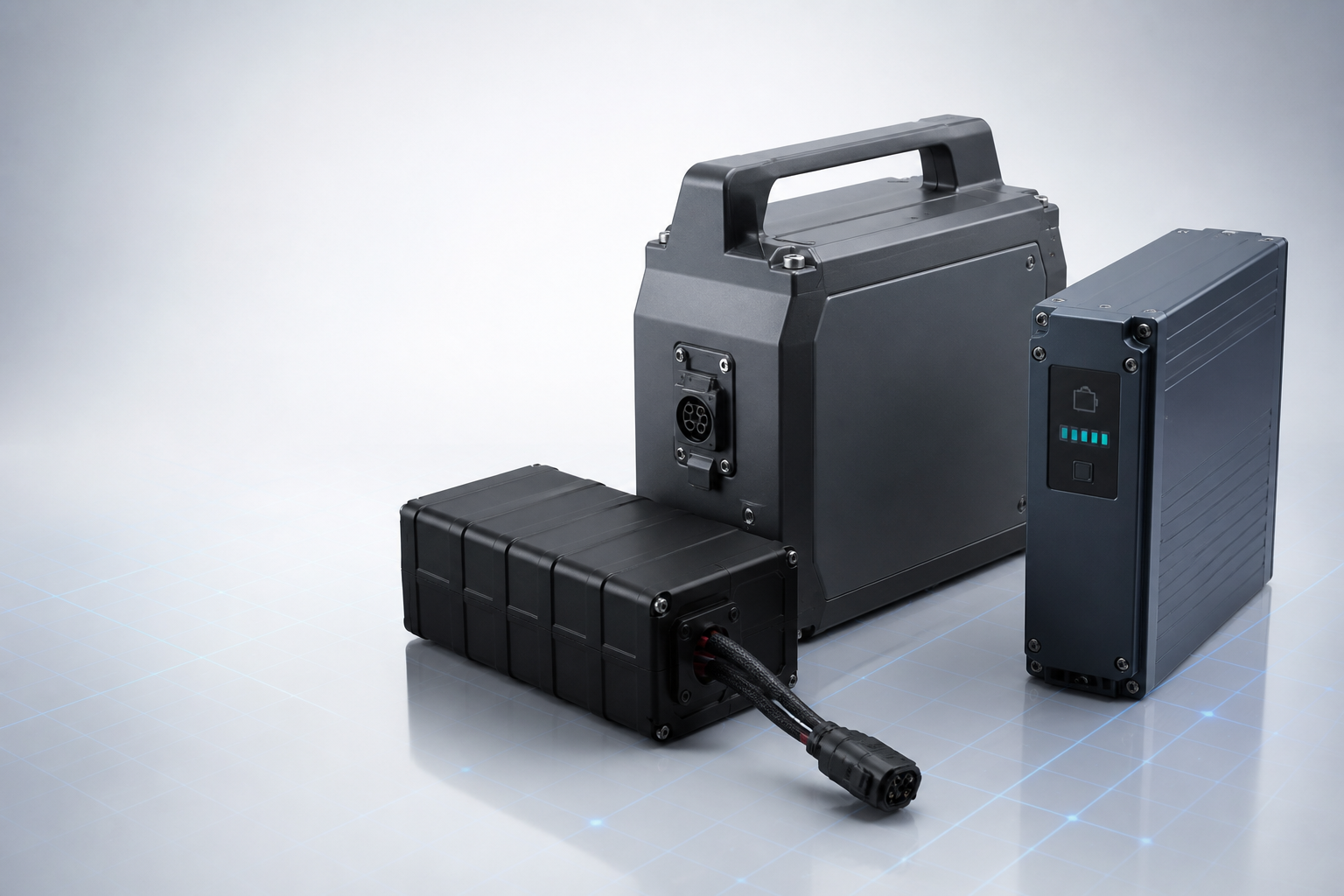
Resolve the decision before selecting a model.
Series count sets voltage and parallel count supports capacity/current, but only approved matched modules and topologies should be combined with coordinated protection and validation.
| IP evidence | Applies to an exact tested enclosure |
|---|---|
| Connector | Current rating alone is insufficient |
| Topology | Series/parallel use must be model-approved |
| Change control | Cable, seal and connector changes may require retest |
Practical review checklist
Freeze drawings, terminals, pinout and mating parts.
Use continuous/peak current, voltage drop and temperature rise.
Set vibration, shock, ingress, venting and materials.
Test the assembled configuration and installation boundary.
What to request from a supplier
Ask for a model-specific specification, electrical and mechanical limits, BMS or interface definition, current test evidence, document list, sample plan and change-control route. Keep open items visible rather than replacing them with a generic promise.
What this page does not prove
It does not certify an unnamed battery, approve a host system, guarantee a carrier route or establish a quotation without the exact model, destination and date.
Turn the decision into a reviewable battery specification.
Send the application, voltage window, load, runtime, space, interfaces, environment, quantity, destination and required documents.